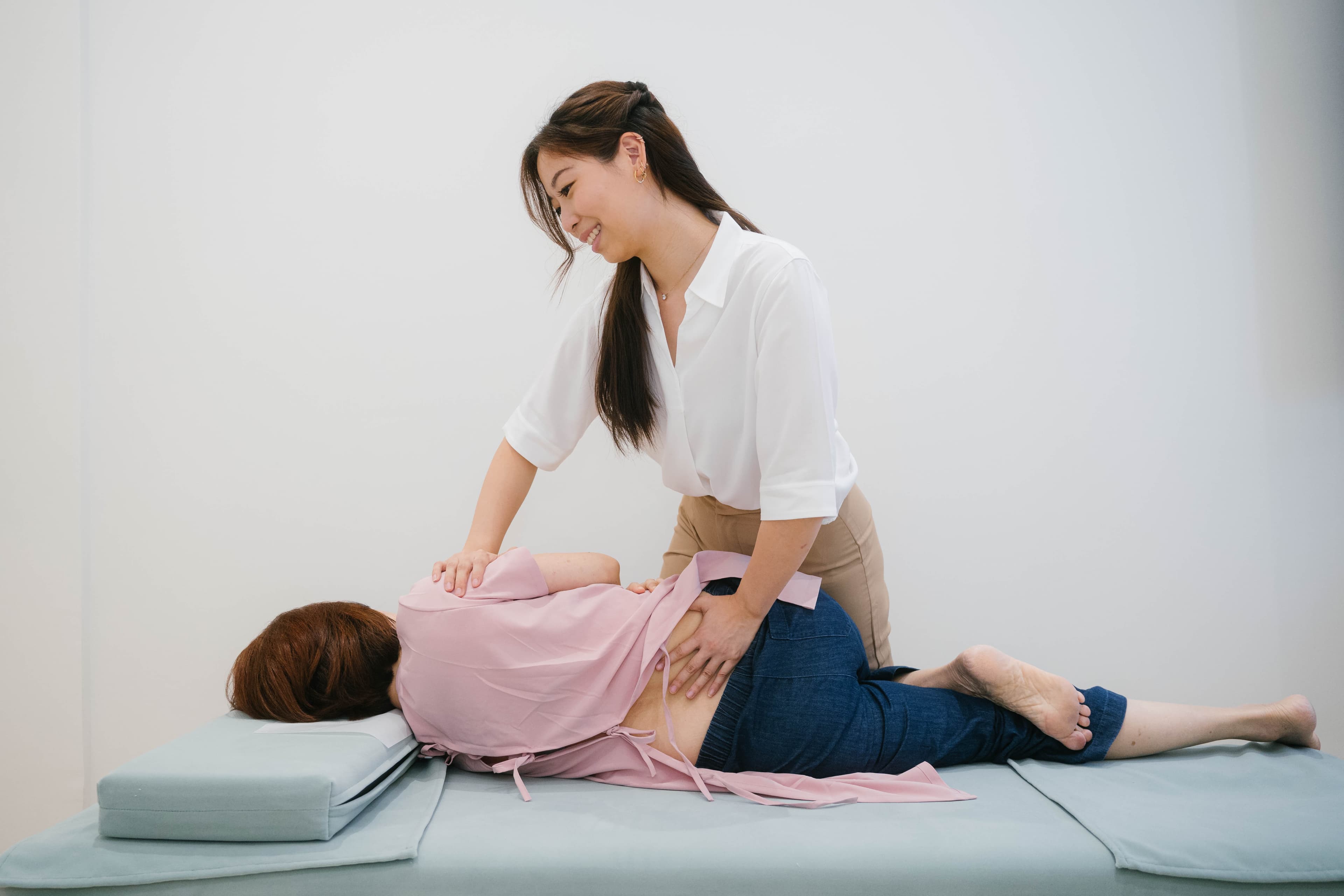
Women present with spinal and pelvic pain differently from men, and the reasons are anatomical, hormonal, and mechanical. The female pelvis is structurally distinct, the sacroiliac joints are shaped differently, and hormonal changes across a lifetime alter ligament stability in ways that have a direct impact on the spine. Gonstead chiropractic addresses this by assessing the specific spinal level involved rather than treating pelvic pain as a generic complaint.
Why does pelvic and lower back pain affect women more than men?
The sacroiliac joint is the primary mechanical link between your spine and your pelvis. It bears the full load of your upper body and transfers it into your legs with every step. Research published in Pain Physician estimates the sacroiliac joint is the source of lower back pain in up to 30% of cases. In women, that proportion is higher. A 2023 review confirmed that the female sacroiliac joint exhibits major anatomical differences from the male joint, including different joint shapes, greater mobility, and higher ligament strain under identical loading conditions, all of which increase the likelihood of degenerative and mechanical dysfunction.
The result is that women are more likely than men to present with sacroiliac joint pain, and more likely to have that pain misattributed to general low back pain or dismissed without proper structural investigation.
What makes the female pelvis structurally different?
The female pelvis is wider and shallower than the male pelvis, with a broader pelvic inlet designed to accommodate childbirth. This geometry creates a different load distribution through the sacroiliac joints and alters the angle at which the femur meets the pelvis. A finite element analysis published in Spine found that the female sacroiliac joint experiences higher mobility, higher stress, and greater ligament strain compared to the male sacroiliac joint under identical loading conditions. The sacrum sits differently within the female pelvis, affecting how load moves through the lumbar spine above it.
These are not small differences. They mean that the mechanical demands placed on the female sacroiliac joint, the lumbar spine, and the surrounding musculature are consistently higher than in men, even without any injury or pregnancy history. Over time, that cumulative load difference matters clinically.
How do hormones affect the spine and pelvis?
The hormone relaxin, which rises during pregnancy and fluctuates during the menstrual cycle, acts on collagen in ligaments and connective tissue, increasing joint laxity. Research confirms that elevated relaxin, progesterone, and estrogen during pregnancy mediate structural changes in the pelvic ligaments, contributing to increased joint laxity and altered spinal mechanics. The centre of gravity shifts anteriorly as the uterus grows, increasing lumbar lordosis, posterior sacral tilt, and cervical extension as compensatory adaptations throughout the spine.
Sacroiliac joint instability and altered spinal mechanics do not always resolve after delivery. For many women, they persist postpartum, particularly when the spine was not assessed or supported during pregnancy. Each subsequent pregnancy builds on the existing mechanical history of the pelvis.
What conditions does this commonly lead to?
Women presenting to TGC with pelvic or spinal pain most commonly fall into one of these four categories:
- Sacroiliac joint dysfunction: pain at one or both SI joints, often felt in the buttock, hip, or posterior thigh. May worsen with prolonged sitting, standing, or walking. Common at all life stages but particularly prevalent postpartum.
- Cervicogenic headache: headaches originating from the cervical spine, often linked to postural changes during pregnancy, breastfeeding posture, or prolonged desk work. The upper cervical spine compensates for pelvic and lumbar changes below it.
- Postural back pain: sustained posture demands from pregnancy, carrying young children, feeding positions, and sedentary work accumulate into mechanical strain across the mid and lower spine.
- Pelvic floor related lower back pain: altered sacral mechanics directly affect the muscles and nerves of the pelvic floor. Women who present with pelvic floor symptoms often also have measurable sacral or lower lumbar subluxation.
None of these are inevitable. They are the predictable outcome of anatomy and hormonal load on a spine that has not been assessed or corrected.
How does Gonstead chiropractic assess the female spine and pelvis?
The Gonstead System is built around finding the specific spinal level that is subluxated, not adjusting broadly. This specificity matters more, not less, when the pelvis is involved, because sacral and lumbar dysfunction in women often produces referral patterns that can be mistaken for hip, pelvic, or organ-related symptoms.
The Gonstead assessment at TGC follows five criteria:
- Visualisation: observing posture, gait, pelvic tilt, and how load is distributed through the spine and hips
- Instrumentation (nervoscope): detecting heat differential along the spine to identify where nerve irritation is present
- Static palpation: feeling the position of each vertebra and the sacrum, identifying swelling, tenderness, or positional change
- Motion palpation: assessing how each spinal segment and the sacroiliac joint move through their normal range
- X-ray analysis: weight-bearing X-rays that show the actual position of the pelvis and lumbar spine under load, not just how they feel
For women, the X-ray view of the sacrum and pelvis is particularly informative. It shows the degree of sacral rotation, the symmetry of the iliac crests, and the position of L5 relative to the sacral base. These findings guide a specific adjustment rather than a general one.
What can you expect from care at TGC?
If you come in with pelvic, sacroiliac, or lower back pain, the first visit involves a full case history and the Gonstead assessment. We want to understand your full reproductive and postural history, including pregnancies, delivery history, and any periods of significant hormonal change, because these are clinically relevant to what we find in the spine.
Care for sacroiliac and lumbar dysfunction typically progresses over several weeks. In the early phase, the goal is to correct the primary subluxation and reduce the nerve irritation it is causing. As the spine stabilises, visit frequency reduces and the focus shifts to maintaining that correction. Many women notice improvement in associated symptoms, including pelvic floor tension, hip restriction, and referred pain, as the sacral and lumbar mechanics normalise.
If your pelvic or spinal pain has a history attached to it, one that goes back to a pregnancy, a period of postural strain, or years of managing symptoms rather than investigating them, it is worth a proper look. Book a consultation at Thrive Gonstead Chiropractic in Bandar Rimbayu. If there is something in the spine contributing to what you are feeling, we will find it.
Frequently Asked Questions
Is chiropractic safe during pregnancy?
Gonstead chiropractic care can be appropriate during pregnancy, and many women find it helpful for managing sacroiliac and lower back pain as the pelvis adapts. Whether care is appropriate for you individually depends on your specific history and presentation. We assess each case before recommending a course of care.
Why does my lower back pain get worse around my period?
The uterus and cervix receive their nerve supply from the sacral spinal cord at levels S2 to S4. When there is a subluxation at the lower lumbar or sacral level, that nerve pathway is already under stress. Hormonal changes during the menstrual cycle can amplify that irritation. Correcting the underlying spinal dysfunction often reduces the cyclical component of the pain.
Can chiropractic help with postpartum back pain?
Postpartum back pain commonly involves residual sacroiliac joint dysfunction from the hormonal and mechanical changes of pregnancy. Gonstead assessment identifies whether there is a measurable subluxation contributing to the pain. Many postpartum women respond well to specific sacral and lumbar correction, particularly when care begins within the first few months after delivery.
Do women need different chiropractic care than men?
The Gonstead assessment process is the same regardless of sex. What changes is the clinical context. For women, the history of hormonal changes, pregnancies, and pelvic load across a lifetime informs what we are looking for on assessment. The adjustment itself is specific to the finding, not to the patient's sex.
How do I know if my hip or pelvic pain is coming from my spine?
Sacroiliac joint dysfunction commonly refers pain into the buttock, hip, posterior thigh, and even the groin, which makes it easy to confuse with hip joint pathology. The Gonstead assessment, particularly the weight-bearing X-ray and motion palpation of the sacroiliac joint, helps distinguish spinal and sacroiliac sources from true hip joint involvement. If the cause is in the spine, we will find it. If it is not, we will tell you that too.
References
- Manchikanti L, et al. Sacroiliac joint pain: a comprehensive review of epidemiology, diagnosis and treatment. Pain Physician. 2009;12(4):E237-276. PubMed
- Tóth F, et al. Sex disparities of the sacroiliac joint: focus on joint anatomy and imaging appearance. Diagnostics. 2023;13(4):625. PubMed
- Kiapour A, et al. Sex specific sacroiliac joint biomechanics during standing upright: a finite element study. Spine. 2018. PubMed
- Yalçınkaya A, et al. Neuromusculoskeletal disorders in pregnancy revisited: insights and clinical implications. PMC. 2025. PMC
- Aldabe D, et al. Pregnancy-related pelvic girdle pain and its relationship with relaxin levels during pregnancy: a systematic review. European Spine Journal. 2012;21(9):1769-1776. PMC
- Standring S (ed). Gray's Anatomy, 41st ed. Elsevier; 2016. Pelvic autonomic innervation: parasympathetic supply from S2-S4 via pelvic splanchnic nerves. StatPearls summary