Gonstead chiropractic is a specific, full-spine approach to chiropractic. We look for the subluxations along your spine, and we decide which one needs correcting first. Pain is often the messenger, but it does not always point to the root cause. Wherever we look, we start from a foundational perspective, and that is the same for every patient at Thrive Gonstead Chiropractic in Bandar Rimbayu.
What is Gonstead chiropractic?
Gonstead chiropractic rests on the idea that your spine works as one connected system. Within that system, a segment can shift out of position and interfere with the nerves that pass through it. We call that a subluxation. Finding one is only the start. The clinical evidence from the assessment then tells us which subluxation needs correcting first, and that choice often makes the biggest difference for the patient.
Think of your spine as a stack of building blocks. Each block sits on the one below and carries the weight of the blocks above. When one block has shifted, the blocks around it respond. Our job is to map which blocks have moved, then decide which one to correct first. Pulling out the wrong block makes the tower worse, so we take the time to get the order right.
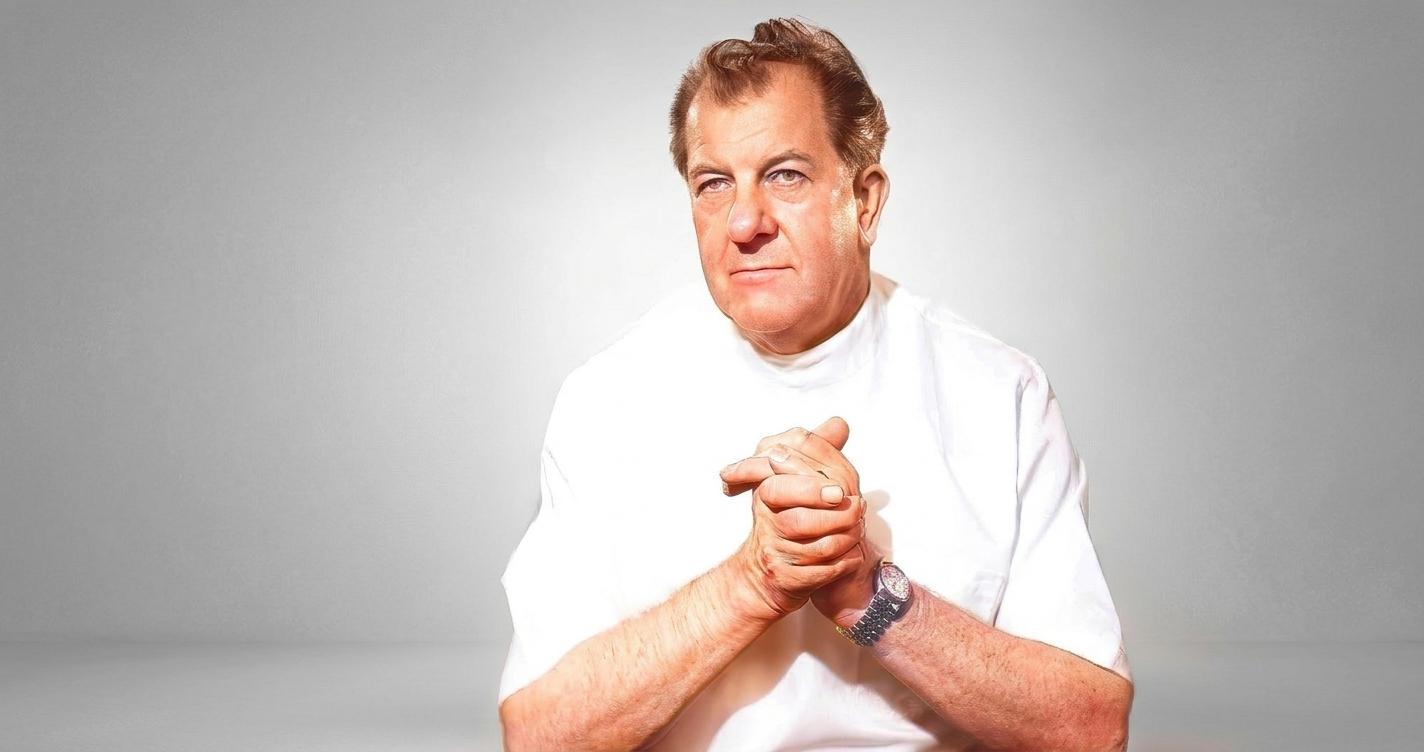
The method was developed by Clarence Gonstead, and it values specificity over force. You will hear us talk about precision often, because a precise correction is the whole point of the visit.
Why does spinal pain matter so much?
Back pain is one of the largest sources of disability in the world. A 2023 study in The Lancet Rheumatology, drawing on Global Burden of Disease data, estimated that 619 million people were living with low back pain in 2020. The same study projects that number will reach 843 million by 2050.
Neck pain follows a similar pattern. A 2024 analysis from the same research project estimated that 269 million people will have neck pain by 2050, an increase of about 32.5 per cent from 2020. Headache disorders are just as widespread. A 2025 analysis of the same data estimated about 2.81 billion cases of headache disorders in 2021, a rise of more than 57 per cent since 1990.
Malaysia has less national data, and what exists is limited to specific settings. Within those settings, the numbers are high. A 2018 survey of army personnel in the Klang Valley found that 48.9 per cent reported low back pain. A 2019 survey of medical students at a public university in Selangor found that 64.5 per cent had experienced low back pain at some point since starting medical school. A 2023 study of adults in Malaysia found that prevalence rose from 64.4 per cent before the COVID-19 lockdown to 83.5 per cent during it.
Knowing how common a problem is tells you about the traffic on the road, not which route will get you home fastest. These figures show why it matters to understand where these problems come from, rather than only where they are felt.
Who was Clarence Gonstead?
Dr Clarence Gonstead was born in 1898 in Willow Lake, South Dakota, and grew up on a dairy farm in Wisconsin. He trained as an engineer and worked as a foreman for an agricultural machinery company. In his early twenties, he became bedridden with rheumatoid arthritis, and conventional treatment did not help him. A local chiropractor's care changed his condition, and in 1921 he decided to become a chiropractor himself.
He trained at the Palmer School of Chiropractic in Davenport, Iowa, and graduated in 1923. He then opened his own practice in Mt Horeb, Wisconsin, where patients travelled from far away to see him. His engineering background shaped how he saw the spine. He treated it like a structure, checking the foundation first and then every part above it.
His contributions were practical as well as theoretical. He pioneered the analysis of full-spine X-rays taken from the front, developed the full-spine side view, and helped develop a skin temperature instrument used in assessment. He kept practising and teaching seminars until his death in 1978. His method is still taught today, and it is the approach we bring to every patient at TGC.
Published research on the Gonstead technique is still limited. Much of what exists consists of case reports and technical descriptions of the method. We would rather say that plainly than overstate what the research shows.
How does the spine hold itself up?
The pelvis is the foundation. Picture a bookshelf with one leg shorter than the others. The shelf tilts, the books slide, and the top ends up crooked even if the top itself is well made. The spine works the same way. When the pelvis is level and centred over the legs, your body balances with very little effort. When it isn't, the spine above has to compensate constantly to keep your head level with the horizon.
Gonstead found that a small imperfection at the foundation can create a much larger deviation higher up. That is why we check the level of your pelvis early in every assessment. A curve in your lower back may be your body's response to something else, not the problem itself, so we look for the source before we correct anything.
Between each pair of vertebrae sits a disc, the main shock absorber of the spine. Gonstead's model puts the disc at the centre of both injury and correction. The outer ring is a tough, flexible layer of fibres, and the inside is a gel that is mostly water. Picture a water balloon wrapped in layers of woven fabric. The fabric holds the water in place while the balloon flexes and absorbs pressure.
Earlier research, including work by Abrahams and Bogduk, suggests that the fibres in the outer ring can suffer tiny amounts of damage once they are stretched beyond about 4 per cent of their length. That is why steady strain, such as holding a poor posture for hours every day, can wear a disc down over time, even when no single moment seems dramatic. Think of bending a paperclip back and forth. One bend does little. Many small bends eventually weaken the metal.
Recent studies of a healthy spine also show that the majority of the weight-bearing work falls on the disc, rather than on the small joints at the back of the spine. That is why we focus on the disc when we assess and correct.
How do we find the subluxation?
We use six tools to locate the subluxations along your spine. We look for each tool to support the same finding before we decide which subluxation to correct first. Think of a detective checking several witnesses before naming a suspect. One witness can be wrong. When several agree, the case gets stronger.
Nervoscope: a skin temperature instrument picks up a sudden, repeatable change in surface temperature over one segment.
Visualisation: we look at your posture, symmetry, movement, and skin for signs that point to a specific area.
Static palpation: we feel for tenderness, skin tone, and swelling at specific levels of your spine.
Motion palpation: we compare how each segment moves against the segments above and below it, and against the opposite side.
X-ray analysis: we review standing, full-spine films for alignment and disc shape. The films are taken by an external radiology provider, and we analyse them here.
Case history: your symptoms, injury history, and reason for visiting help us understand the likely nerve pathway behind your complaint.
Symptoms are clues, not verdicts. Your history guides the examination, but it does not replace it. We are not trying to name a disease. Our focus is the chiropractic subluxation and the nerve interference it may cause, which can drive the dysfunction and the symptoms your body is feeling. Our job is to find the segment that is not working as it should, and the level where the nerves may be affected. Each finding is repeated before we adjust, which is why a Gonstead visit can feel methodical.
What is the vertebral subluxation complex?
A subluxation is more than a bone out of place. The Association of Chiropractic Colleges describes a subluxation as a complex of functional, structural and pathological joint changes that compromise neural integrity and may influence organ function and general health. Chiropractic calls this whole picture the vertebral subluxation complex, and it develops in stages.
It begins with a traumatic event, which may be a single injury or repeated small strains. The forces alter how the joint moves, which we call kinesiopathology. Over time, the collagen fibres in the disc and supporting ligaments can be stretched and torn, which is histopathology. The body responds with inflammation, and the disc and surrounding tissues swell. The vertebra can then sit out of its normal position relative to the segments around it, which is positional dyskinesia. When the joint loses its normal motion, that is fixation dysfunction.
Next come the effects on the nerves and muscles. Neuropathophysiology describes changes in nerve function that can affect how signals travel to and from the area. Myopathology describes changes in the muscles, such as weakness, tightness or spasm, which can be a response to the nerve changes or the body's way of protecting the spine. If the pattern continues, pathophysiology describes the cumulative, degenerative change that builds over time, including changes to the disc, the joint surfaces, and overall posture and balance.
Think of a loose stone in a stream: the stone shifts, the water around it changes course, and the riverbank wears down over time. Our focus is the root of that chain, the place where a correction can make the biggest difference.
How is a Gonstead adjustment different?
Many people come in expecting us to work on the painful area, and we understand why, because pain is the most obvious signal. But the place that hurts is not always where the root cause sits. A problem in the low back can show up as a sore neck, and a problem in the upper neck can show up as symptoms down the leg. The pain tells us where to look. The evidence tells us where to correct.
The second difference is specificity. We believe the fewer segments we adjust in a single visit, the less disturbance there is to the nervous system, and the better the correction holds. Think of a surgeon with a scalpel rather than someone swinging a hammer. Gonstead used to say that to be scientific, you must be specific.
A Gonstead adjustment is a short, precise thrust. It is directed at one identified segment, away from the misalignment, so the surrounding ligaments and disc are not pushed past their normal limits. The speed and force are tailored to each person. Skilled adjusting often needs far less force than people expect, because the skill lies in the direction and the contact. Think of a key turning in a lock. The right key, in the right direction, needs only a small turn.
Equally important is knowing when to stop. When your symptoms and findings are improving, we leave the corrected segment alone and give your body time to hold the change. We adjust again only when progress slows or things get worse. Think of a garden that is growing well: you water when it needs it, not every hour.
Frequently asked questions
What does a Gonstead correction aim to do?
Our aim is the root cause. We look for chiropractic subluxations, and where nerve interference is driving the dysfunction behind your symptoms, correcting that subluxation is our focus. Every body responds in its own way, so we review your progress with you as care goes on, and we set realistic expectations from the first visit.
Will you adjust the spot that hurts?
Sometimes, but not always. The adjustment is aimed at the segment the evidence points to, which may be near the painful area or some distance from it.
Do Gonstead adjustments always make a sound?
No. Practitioners sometimes hear a deep, guttural sound called a G-note, which they associate with a release inside the disc. We treat it as a sign of a disc-focused setting. It is not the goal of your visit.
How many visits will I need?
It is difficult to predict how fast a person heals, so we reassess as we go. After some time, we get a feel for how quickly your body responds, and then we can set a more accurate timeline. Every plan is tailored to you, and we explain it as it becomes clearer.
When should I see a doctor first?
Sometimes your symptoms point to something that needs a doctor first. Numbness around the groin, new loss of bladder or bowel control, weakness that is getting worse, fever with back pain, or pain after a serious injury need urgent medical attention. We do not treat these as chiropractic problems, and an assessment with us does not replace medical screening.
Gonstead chiropractic comes down to one question: which subluxation in your spine should we correct first? Answering it takes a full look at your spine and pelvis, then a precise adjustment where the evidence points. If you want to know whether this approach suits your situation, the next step is an assessment. At Thrive Gonstead Chiropractic in Bandar Rimbayu, we are happy to walk you through what we find. Does that make sense?
References
- Ferreira ML, de Luca K, Haile LM, et al. Global, regional, and national burden of low back pain, 1990 to 2020, and projections to 2050. The Lancet Rheumatology. 2023;5(6):e316 to e329. https://pubmed.ncbi.nlm.nih.gov/37273833/
- GBD 2021 Neck Pain Collaborators. Global, regional, and national burden of neck pain, 1990 to 2020, and projections to 2050. The Lancet Rheumatology. 2024;6(3):e142 to e155. https://www.ncbi.nlm.nih.gov/pmc/articles/PMC10897950/
- Rui Y, Wu B, Li Q, Zhang K. Global trends and regional disparities in the burden of headache disorders, 1990 to 2021. Frontiers in Neurology. 2025;16:1575705. https://www.frontiersin.org/journals/neurology/articles/10.3389/fneur.2025.1575705
- Abas AH, Daud A, Mohd Hairon S, Shafei MN. Prevalence and risk factors of low back pain in Malaysia: a scoping review. Malaysian Journal of Medical Sciences. 2023;30(3). https://www.ncbi.nlm.nih.gov/pmc/articles/PMC10325122/
- Chan EWM, Mohamad Shariff AH, Mohd Din FH. Prevalence and factors associated with low back pain among Malaysian army personnel stationed in Klang Valley. Biomedical Human Kinetics. 2019. https://doaj.org/article/c64120b6d89e4749b4895327faad7be1
- Amir Husin MA, Mat Nor MZ, Rashid MRA, Mohamad Nor NAU, Addnan FH. High prevalence of low back pain among medical students in Malaysia: a concern for intervention. Universiti Sains Islam Malaysia. https://oarep.usim.edu.my/bitstreams/f7ebc503-1e14-4f6f-93bd-371f28f88dde/download
- Low back pain intensity and prevalence among adults in Malaysia before and during the COVID-19 lockdown. Malaysian Journal of Medicine and Health Sciences. 2023;10 to 17. https://search.bvsalud.org/gim/resource/es/wpr-998733
- Gonstead Clinical Studies Society. Research publications. https://www.gonstead.com/?p=185