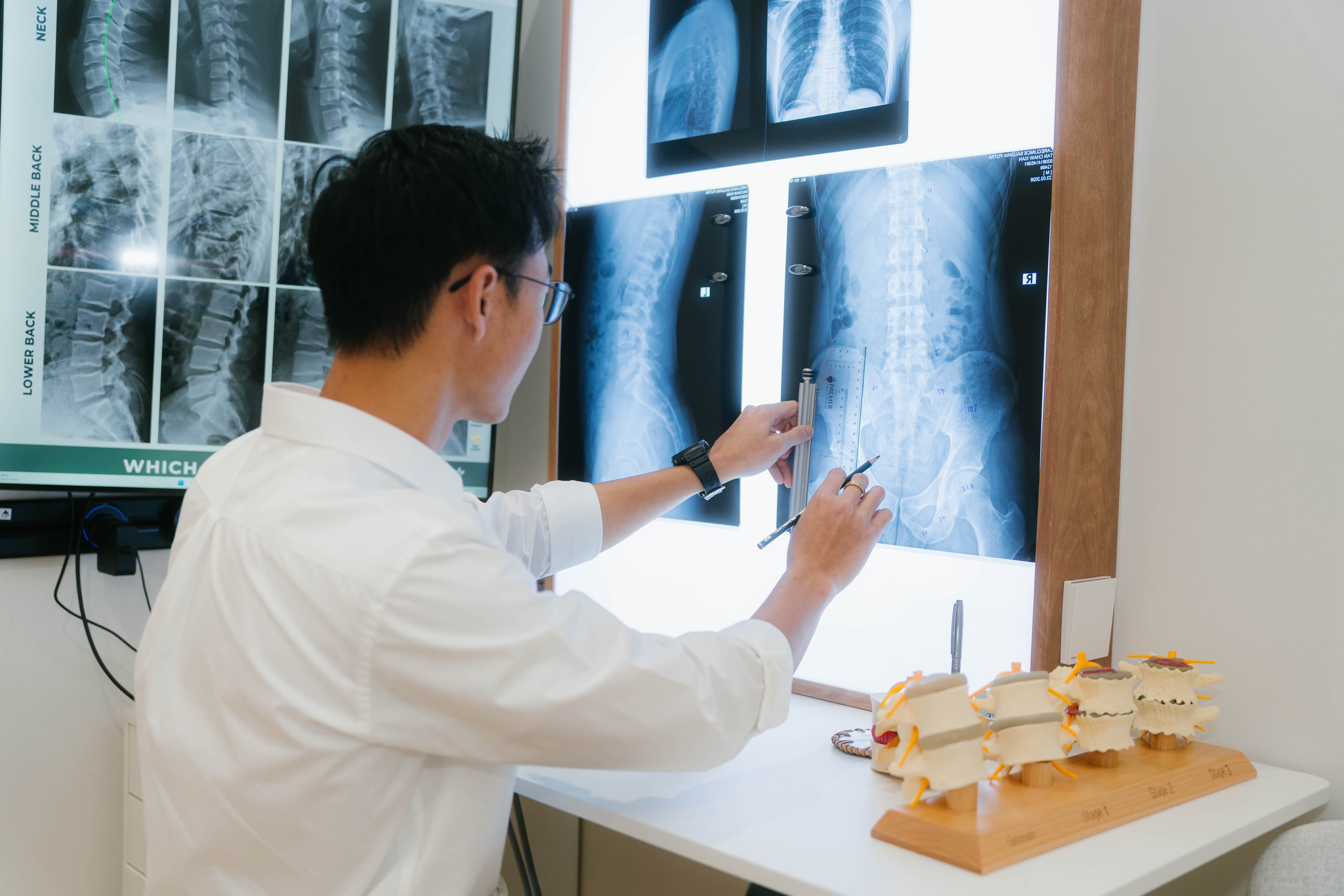
Tailbone pain, also called coccydynia, is an ache at the base of your spine that usually flares when you sit down. At Thrive Gonstead Chiropractic in Bandar Rimbayu, we correct subluxations and the nerve interference they may cause, and tailbone pain is one of the effects we may observe. This post explains the common causes, how a Gonstead assessment looks at it, and the signs that call for a medical assessment alongside your chiropractic care.
Why does my tailbone hurt when I sit down?
Sitting puts your body weight directly onto the coccyx, the small group of bones at the bottom of your spine. When that area is already irritated or moving too much, every session of sitting adds to the pressure. Hard chairs, long car rides and bicycle seats often make it worse.
In practice, people usually describe the pain in similar ways:
- An achy or sharp pain at the bottom of the spine, just above the anus
- Pain that gets worse when you sit on a hard surface
- A jolt of pain when you stand up from a chair
- Discomfort during a bowel movement or during sex
If your pain spreads further up your back, our back pain guide explains how the lower spine and pelvis work together. If it travels down your leg, our sciatica guide covers that pattern.
What causes tailbone pain?
A StatPearls reference on the NCBI website names direct trauma, repeated small strains and childbirth as common causes. In our experience, these three triggers account for many of the cases we see. The list below covers the most frequent ones.
- A fall onto the tailbone, such as landing hard on a floor or step
- Childbirth, when the baby passes through the pelvis
- Repeated strain from cycling, rowing or leaning back again and again
- Long periods of sitting on hard or narrow seats
- A coccyx that moves too much, known as hypermobility
Sometimes no clear trigger is found. This is called idiopathic coccydynia, and it still deserves a careful assessment of the spine, pelvis and nerves.
Does childbirth cause tailbone pain?
Yes, childbirth is one of the most recognised causes. Researchers who published a 2012 case series of 57 women in the European Journal of Physical and Rehabilitation Medicine found that the pain began as soon as women sat down after delivery. Childbirth accounted for about 7.3 percent of the coccydynia cases among the women seen at their specialist clinic.
If you are pregnant or have recently given birth, let us know at your first visit. We will keep your doctor or midwife informed as part of your care, and we will work with them where needed.
How does a Gonstead assessment look at tailbone pain?
A Gonstead assessment looks for the spinal segment that is most involved, rather than adjusting the whole spine at once. For tailbone pain, that means checking the coccyx, sacrum, pelvis and lower spine before choosing one area to correct.
Each part of the assessment builds on the last:
- Case history: when the pain started, what makes it worse, and any past falls or births
- Visualisation: how you stand, sit and hold your pelvis
- Static palpation: feeling the bones and muscles while you lie still
- Motion palpation: feeling how each joint moves
- Nervoscope: measuring skin temperature differences that may point to nerve interference
- X-rays, when needed: taken at an external imaging facility, then analysed with Gonstead line drawings once the films are returned to us
In our experience, when the coccyx moves too far on sitting, the sacrum and pelvis often show a matching pattern. That is why the assessment does not stop at the tailbone itself.
What signs call for a medical assessment?
Tailbone pain can sometimes come from the bowel or urinary tract, and rare infections or tumours can cause it too. These causes need a medical assessment, and we check for them during every case history. When they are suspected, we will recommend that you see a doctor, and we will stay involved in your care alongside them.
Watch for these signs. If you notice any of them, arrange a medical assessment:
- A fall with bruising, swelling, or a tailbone that looks out of place
- Fever, chills, or feeling unwell along with the pain
- Numbness around the anus, genitals or inner thighs
- New problems controlling your bladder or bowel
- Pain that wakes you at night or does not ease with rest
- Unexplained weight loss, or pain that keeps getting worse over several weeks
What can you expect from Gonstead care for tailbone pain?
Gonstead care uses specific adjustments, directed at one identified segment at a time. We correct subluxations and the nerve interference they may cause, and we do not promise results. In practice, many people notice changes in how they sit over several visits, but every case is different.
A specific adjustment is a precise, controlled movement to one joint. Because the coccyx sits close to the sacrum and pelvis, we may adjust one of those areas instead of the tailbone itself. The choice depends on what your assessment finds.
While your care is underway, these habits can make sitting easier:
- Use a cushion that supports your lower back and reduces direct pressure on the tailbone
- Stand up and move every half hour or so
- Avoid hard, narrow seats for long stretches
- Shift your weight from side to side when you sit for long periods
Frequently asked questions
Does tailbone pain always come from a fall? No. A fall is one common cause, but childbirth, repeated strain and long sitting on hard surfaces can also cause it. Some cases have no clear trigger, and those are called idiopathic.
Is chiropractic care suitable for tailbone pain? It can be, for many cases where the cause involves the spine, pelvis or nerves. At Thrive Gonstead Chiropractic, we screen for warning signs during the case history, and we work alongside your doctor when a medical assessment is needed.
How long does tailbone pain last? Timelines vary a great deal. In our experience, some people improve within weeks, while others have the pain for months, especially when no clear cause is found.
Can a cushion help tailbone pain? In our experience, many people find that a supportive cushion makes sitting easier. Choose one that supports your lower back and keeps pressure off the tailbone, and change your position often.
In our experience, tailbone pain often signals that the lower spine and pelvis are not moving as they should. If sitting has become hard for you, we would like to look at what is driving it. Book a consultation with Thrive Gonstead Chiropractic in Bandar Rimbayu, and we will take it from there. Does that sound like what you are dealing with?
References
- Mabrouk A, Alloush A, Foye P. Coccyx Pain. In: StatPearls [Internet]. Treasure Island (FL): StatPearls Publishing; 2026 Jan. Last updated 9 August 2025. Available from: https://www.ncbi.nlm.nih.gov/books/NBK563139/
- Postpartum coccydynia: a case series study of 57 women. Eur J Phys Rehabil Med. 2012 Sep;48(3):387-92. PMID: 22820826. [Author list to add.]